AI agents in EU small businesses: active users grew 8.1-fold
OpenAI’s research reports an 8.1-fold increase in weekly active users of Codex or ChatGPT Work among EU small and medium businesses in its sample.
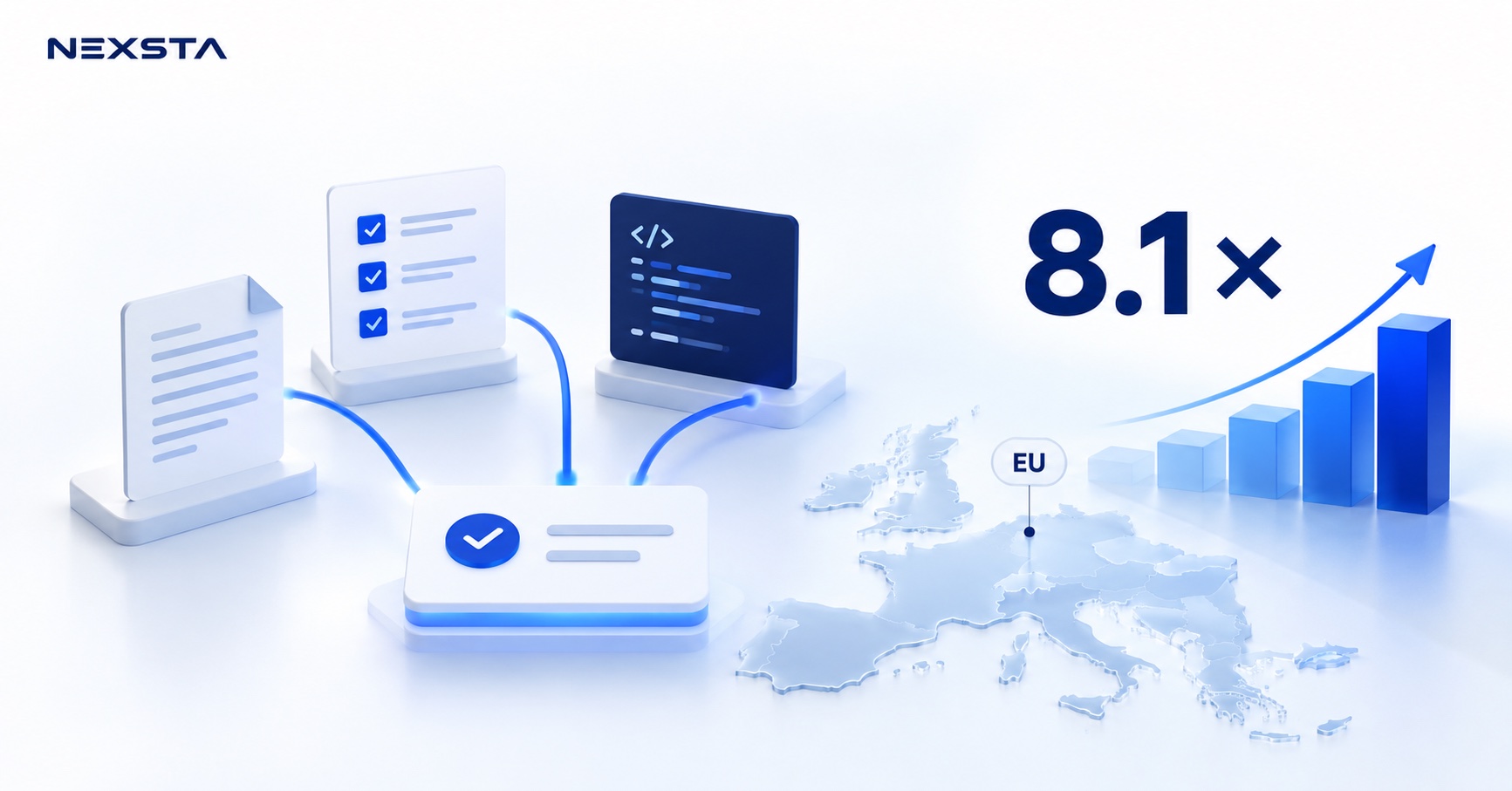
On October 14, 2026, OpenAI published Europe’s Agentic Opportunity, a study of AI use in the European Union. One finding: weekly active users of Codex or ChatGPT Work among small and medium businesses in the analysed sample increased 8.1-fold relative to early May.
What the figure measures
The PDF compares May 1–7 with September 29–October 5, 2026. For this analysis, small and medium businesses have no more than 200 associated users. The metric concerns users of two tools in OpenAI’s sample, not the number of all European companies, all AI agents or completed tasks.
It cannot be applied to Russia or interpreted as an 8.1-fold rise in revenue or productivity. Tool availability and working practices differ across countries. OpenAI itself highlights the gap between widespread access to AI and depth of use.
From an answer to a finished result
The practical shift is in how work is assigned. Rather than asking one isolated question, an employee requests an outcome using context: gather information, compare documents, organise findings and check constraints. Such workflows need relevant materials, clear permissions and human review. Calling a system an agent does not make its output reliable.
A separate part of the report describes work activities such as compiling records and documentation, developing business or marketing plans, reviewing materials and researching issues. Its methodology differs: it analyses messages from users of consumer ChatGPT plans, rather than listing autonomous actions by every company in the business-account sample.
Where a small business can begin
- Choose a recurring process with a clear result, such as clarifying a visitor’s initial request.
- Define the sources: current services, FAQs, terms, documents and company price lists.
- Set boundaries: which questions go to an employee and which actions need confirmation.
- Test ordinary and difficult inquiries, then assess answer quality and the completeness of collected information.
Where NEXSTA fits
NEXSTA focuses on website visitors: answering from company knowledge, clarifying needs and handling inquiries. It serves a specific stage between the first question and a further conversation with an employee. An online store, clinic and construction company will need different knowledge and consultation boundaries.
OpenAI’s research does not imply that NEXSTA performs arbitrary office tasks or has the functions of Codex and ChatGPT Work. European figures describe a trend in the studied environment. For an individual business, testing one relevant scenario and its limits is more useful than assuming the same growth locally.